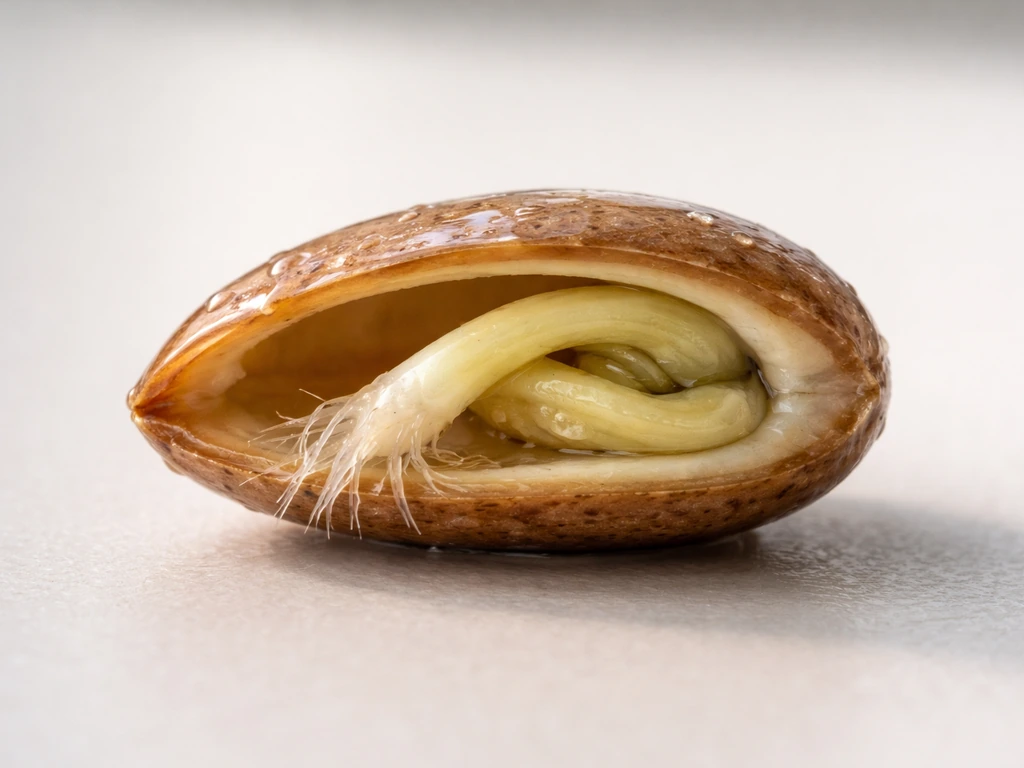
Roots grow when they have three things working together: enough oxygen in the soil to power cell respiration, a steady supply of sugars coming down from the leaves, and physical space to push through. Take away any one of those, and root elongation stalls. The good news is that most root growth problems trace back to a handful of fixable conditions, and once you understand the mechanism, the fix becomes obvious.
What Makes Roots Grow: Oxygen, Water, Soil, Nutrients

Marcus Whitmore
30 Apr 2026
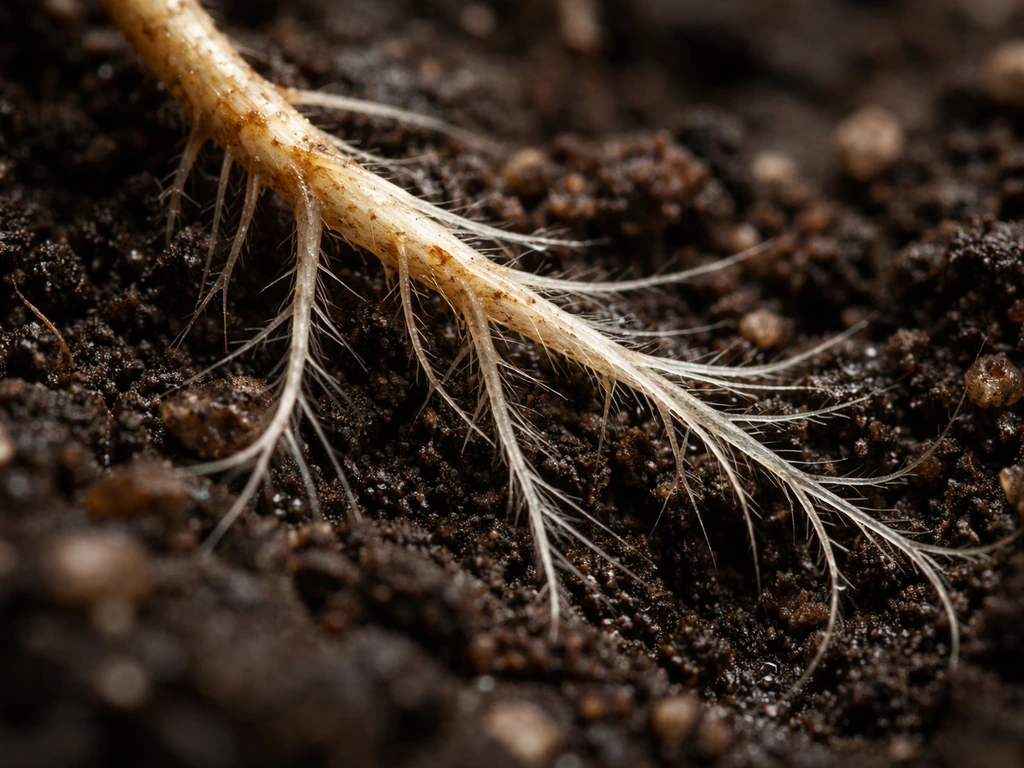
The core drivers: water, oxygen, and nutrients
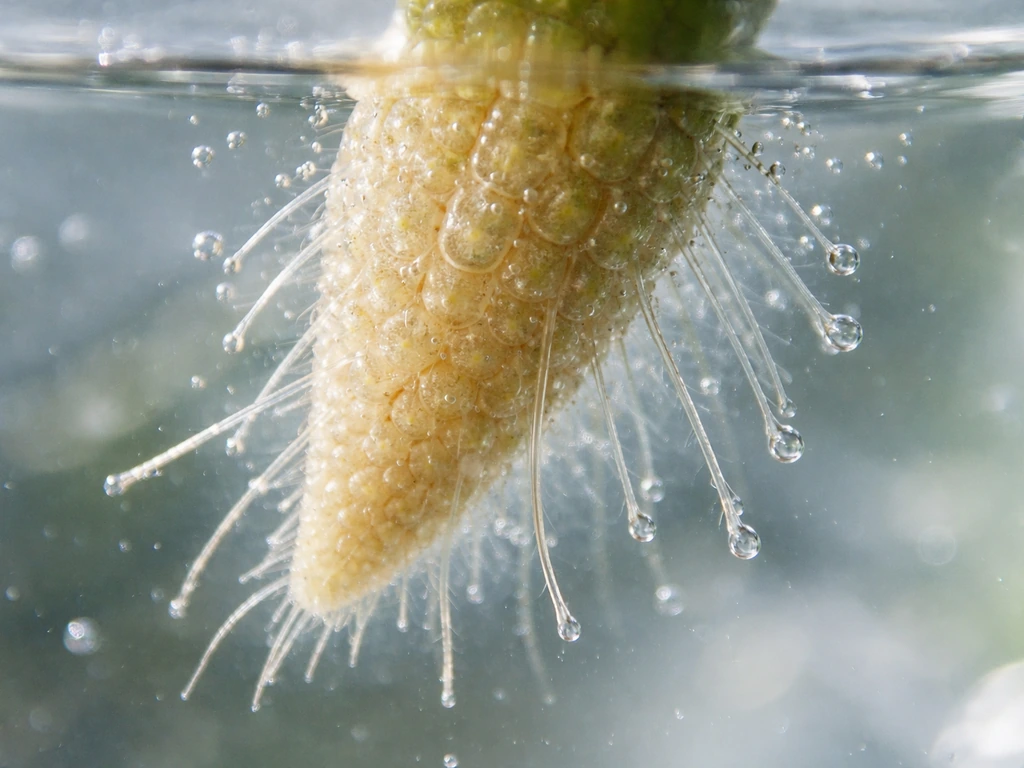
Water is not just something roots absorb. It's the medium that drives cell expansion in the root tip. When a root cell takes on water, it swells, building turgor pressure that literally pushes the cell wall outward. That pressure is what elongates the root. Without adequate soil moisture, that turgor is lost, elongation stops, and the root tip can't advance.
Oxygen is just as critical, and it's the one most gardeners overlook. Root cells don't photosynthesize. They breathe, breaking down sugars through aerobic respiration to generate the ATP that powers growth, nutrient uptake, and everything else. Researchers describe roots in waterlogged soils as literally 'asphyxiated.' Oxygen reaches roots by diffusing through air-filled pores in the soil, and there's a practical threshold to know: when air-filled porosity drops below about 10% of soil volume, root respiration and growth become seriously impaired. Waterlogged soil can push that number toward zero.
Nutrients shape root architecture more than most people realize. Phosphorus deficiency reduces activity in the root apical meristem, cutting cell division rates at the very tip where growth originates. Potassium deficiency has been shown to suppress lateral root formation, partly by reducing auxin concentrations in the root tip. And when aeration is poor, iron chlorosis can develop because waterlogged, oxygen-starved soils make iron less available, adding a micronutrient problem on top of an oxygen problem. The three stresses stack up fast.
How soil conditions shape root growth
Soil is the physical world a root has to navigate, and its texture, structure, and compaction level determine how far and how fast roots can travel. Think of it as the difference between swimming through water versus pushing through wet cement.
Compaction and mechanical resistance
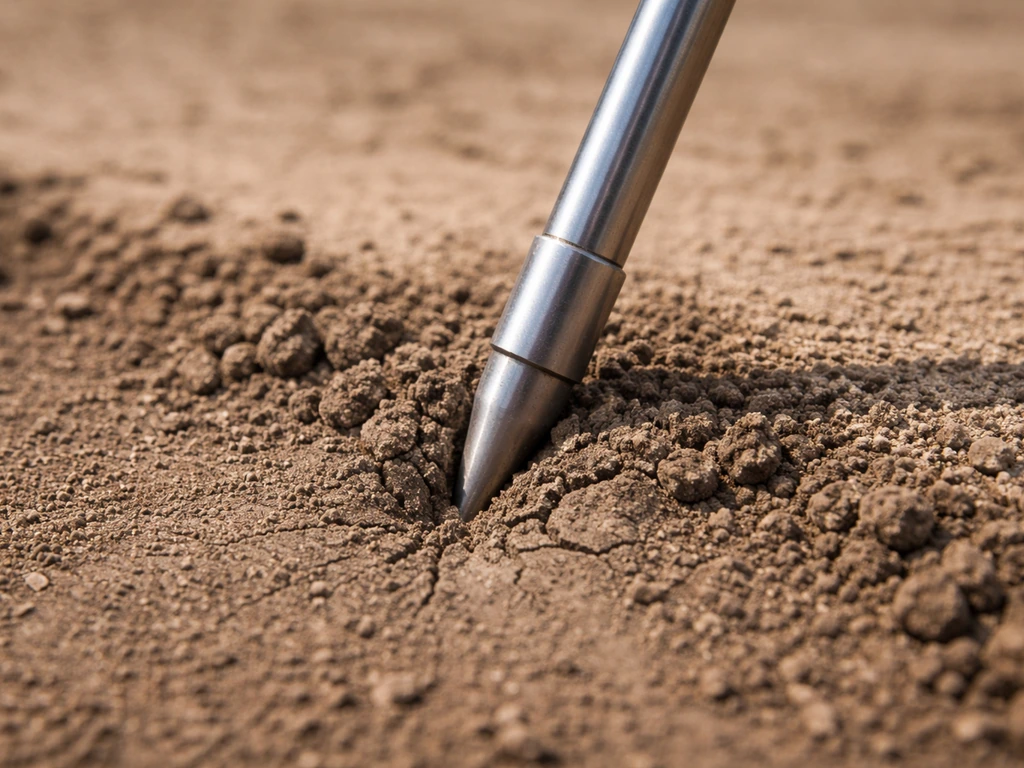
Compacted soil crushes macropores, reducing both aeration and the physical space roots need to advance. Penetration resistance is measured in megapascals (MPa), and the numbers get serious quickly. At around 3.2 MPa, upland rice roots show roughly a 50% reduction in growth rate. At 6 MPa, most crop roots stop penetrating entirely. For reference, heavily trafficked garden soil or clay that's dried out can easily reach those levels. Even before it hits those extremes, compaction reduces the number of days per year when soil has adequate air-filled porosity, so roots are working in hostile conditions more often than you'd think.
Soil texture and pore structure
Sandy soils drain fast and stay well aerated but dry out quickly and hold fewer nutrients. Heavy clay soils retain nutrients and water well but drain slowly, creating the low-oxygen conditions that strangle root growth. Loam soils sit in the sweet spot. The goal in any soil type is to maintain enough macroporosity (the large pores that drain freely and hold air) to keep oxygen diffusion moving into the root zone. Good organic matter content builds this structure over time.
Moisture gradients and hydrotropism
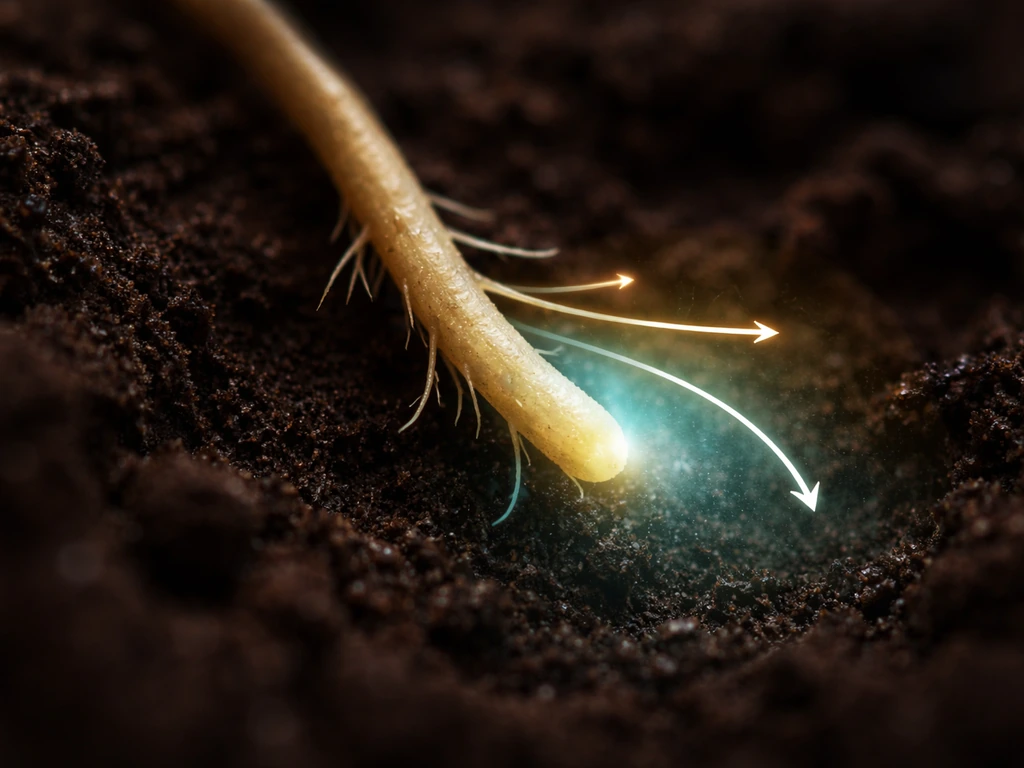
Roots don't just grow straight down. They steer. When there's a moisture gradient in the soil, roots sense it at the root cap and bend toward higher water potential. This response, called hydrotropism, is one reason deep watering (letting water penetrate 15 to 30 cm down) encourages deeper root systems, while frequent shallow watering keeps roots clustered near the surface where they're vulnerable to drying out. You can literally train root direction by where you put the water.
Plant hormones and signals that steer root growth
Roots don't grow randomly. The plant uses a sophisticated hormonal network to decide where to send roots, when to branch, and when to stop. Understanding even the basics of this system helps explain why some garden interventions work and others don't.
- Auxin: This is the primary growth hormone in roots. It accumulates at the root tip and controls elongation and directional growth. Gravity pulls auxin to the lower side of a root, causing that side to elongate less and bending the root downward (gravitropism). Auxin also moves to the tip of lateral root primordia to initiate branching. Both phosphorus and potassium deficiency disrupt auxin distribution in the root tip, which is a direct reason nutrient shortfalls change root architecture.
- Cytokinins: Made mainly in root tips and shoots, cytokinins promote cell division and interact with auxin to balance root versus shoot growth. They also regulate how many lateral roots form.
- Ethylene: This gas builds up quickly in waterlogged, low-oxygen soils. In small amounts, it helps the plant adapt to flooding by triggering anatomical changes. In excess, it inhibits lateral root formation by interfering with auxin transport. So waterlogged roots get a double hit: oxygen deprivation plus ethylene-suppressed branching.
- Strigolactones: These hormones, produced in roots especially under phosphorus shortage, regulate root system architecture. In phosphorus-deficient plants, strigolactones influence how many lateral roots form and how root hairs develop, often in ways that change based on auxin sensitivity. They're part of the reason a phosphorus-starved plant looks architecturally different at the root level.
- ABA (abscisic acid): Under drought or osmotic stress, ABA rises and interacts with auxin, cytokinin, and ethylene networks to slow root elongation. The slow-down is a protective response, but auxin can partially rescue root meristem activity even under osmotic stress conditions.
Roots also respond to physical contact through thigmotropism: when a root tip hits a rock or dense soil layer, mechanosensory signals (partly ethylene-mediated) cause the root to bend and grow around the obstacle rather than just stopping. This is why roots snake through cracks and follow drainage lines in compacted soils.
How roots get their energy (it all starts in the leaves)
Roots can't make their own food. Every gram of root growth depends on sugars traveling down from the leaves through the phloem. Leaf growth and root growth are tightly linked, because the same carbon supply that powers roots also helps leaves build bigger cells. This is a point that connects directly to shoot health: anything that reduces photosynthesis, whether that's shade, pest damage, or drought shutting down stomata, also reduces the carbon supply available to roots.
Under drought stress, photosynthesis drops and the plant shifts how it allocates the carbon it does produce. Research on field crops shows drought meaningfully changes how carbon is partitioned between root and shoot tissue. Low light has the opposite effect of what you might expect: plants in shade tend to develop smaller root systems relative to shoot size, because available photosynthate is prioritized for shoot growth toward light rather than root expansion.
The practical implication is straightforward. If you want vigorous root growth, you need vigorous leaves. Keeping foliage healthy, adequately lit, and free of stress is part of root care, not separate from it. This is also why root growth and shoot growth are tightly linked topics: the carbon pipeline runs one direction, from leaves down.
What stops roots from growing indefinitely
Roots don't keep expanding without limit, and the constraints are both physical and biological. Understanding them is useful if you're trying to diagnose why root growth has stalled.
| Constraint | What it does | When it hits |
|---|---|---|
| Oxygen diffusion limit | As roots grow deeper or the soil gets wetter, oxygen takes longer to diffuse from the surface to the root apex. Growth slows when the tip gets too far from an oxygen source. Oxygen moves ~10,000x slower through water than air, so even brief waterlogging creates an oxygen desert. | Waterlogged soils, deep container media, compacted hardpan layers |
| Mechanical resistance | Roots generate pressure to push through soil particles. Beyond ~6 MPa penetration resistance, roots physically cannot advance. At 3.2 MPa, growth is already cut by roughly half. | Compacted clay, dried soils, hardpan, container walls |
| Salinity and osmotic stress | High salt concentrations create osmotic stress that reduces turgor within minutes, halting elongation. Ion-specific toxicity from sodium and chloride adds a second layer of damage. | Saline soils, over-fertilized containers, coastal gardens |
| Pathogens and disease | Root rot organisms like Pythium thrive in cold, wet, poorly aerated soils. They attack the root tip and cortex, causing dieback and stopping growth entirely. Damping-off in seedlings is a visible version of this. | Waterlogged, cold soils; stressed seedlings; reused potting mix |
| Nutrient toxicity | Excess aluminum and manganese become soluble in very acidic soils and are directly toxic to root cells, inhibiting meristem function. | Soil pH below ~5.5 |
| Carbon shortage | If shoot photosynthesis drops (shade, defoliation, disease), there's less sugar available to power root respiration and cell division. | Dense canopy shade, heavy pest pressure, severe drought |
The bigger picture is that roots operate within a system of competing constraints, and it usually isn't just one thing. Poor drainage causes oxygen deficiency, which triggers ethylene accumulation, which suppresses lateral root branching, which reduces the plant's ability to explore for phosphorus, which alters auxin signaling. The RHS notes that damping-off is caused by multiple soil-borne fungi and fungus-like organisms including Pythium and Phytophthora, and it is favored by wet, high-humidity conditions wet conditions. One bad condition cascades into several. That's why fixing the primary bottleneck, usually aeration or compaction, tends to produce disproportionate improvements.
How to improve root growth starting today
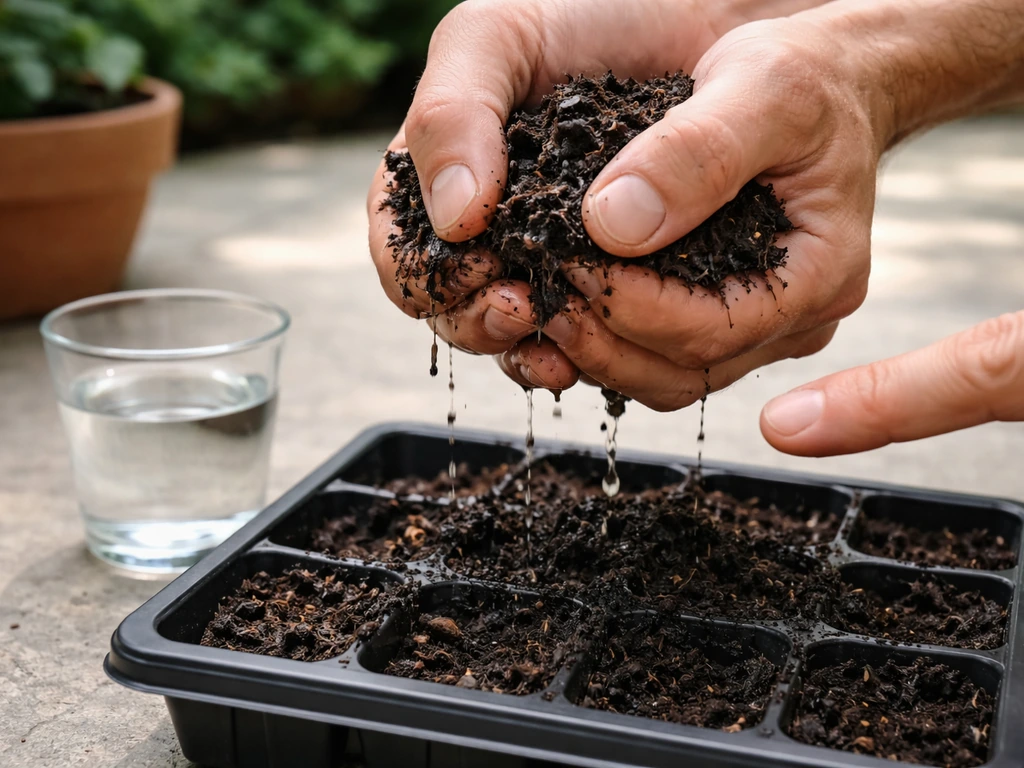
Here's how to translate the mechanisms above into actions. Go through this list and identify which constraint is most likely limiting your situation right now.
- Check your soil's air-filled porosity first. Pick up a handful of soil. If water squeezes out easily, you're below the 10% air-filled porosity threshold that marks the start of root dysfunction. The fix is to stop watering until the soil partially dries, then improve drainage long-term through organic matter addition, raised beds, or drainage channels.
- Test for compaction. Push a rod, pencil, or your finger into the soil. If you can't push it to 15 cm without significant force, compaction is restricting root penetration. For gardens, deep digging or broadforking breaks compaction layers. For container plants, repot into fresh, well-structured mix.
- Water deeply and less frequently. Shallow, frequent watering keeps roots near the surface and creates a shallow moisture gradient. Water until you've wet the soil to at least 20 to 30 cm, then let it partially dry before watering again. This pushes roots downward and builds a deeper system.
- Address phosphorus if roots are short and poorly branched. Phosphorus deficiency reduces cell division at the root apical meristem and changes root architecture. A soil test will confirm it. Bone meal, rock phosphate, or balanced fertilizers with adequate P correct this. Keep soil pH in the 6.0 to 7.0 range where phosphorus availability is highest.
- Ensure adequate potassium. Low potassium suppresses lateral root formation through its effects on auxin distribution. A standard balanced fertilizer or potassium sulfate addresses this, but again, a soil test gives you the real picture.
- Protect the leaf canopy. Root growth depends on photosynthate from leaves. If plants are shaded, defoliated, or water-stressed, address those conditions to restore carbon supply to the roots. For indoor or greenhouse plants, check that light levels are adequate.
- Check soil pH. At pH below 5.5, aluminum and manganese become toxic to root cells. At pH above 7.5, phosphorus and iron lock up and become unavailable. Lime raises pH; sulfur or acidifying fertilizers lower it. Most plants thrive between pH 6.0 and 7.0.
- Look at the roots directly if growth seems stalled. For containers, slide the root ball out. Healthy roots are white or cream-colored and firm. Brown, mushy, or sparse roots indicate rot, oxygen stress, or severe compaction. Remove diseased roots, repot into fresh well-draining mix, and ease off watering.
- For seedlings showing damping-off (collapsing at the base), the fix is environmental: reduce moisture, improve air circulation, use well-draining seed-starting mix, and keep temperatures warm enough that germination is fast. Cold, wet conditions are the main trigger for Pythium and similar pathogens.
- For established garden plants with poor root spread, the best long-term investment is adding organic matter (compost) to build soil structure, macroporosity, and microbial health. A 5 to 7 cm layer of compost worked into the top 15 to 20 cm of soil improves aeration, water retention balance, and nutrient cycling simultaneously.
The three root growth stages worth knowing
Root growth moves through three broadly recognizable stages, and knowing where your plant is helps you match interventions to the right moment. First comes emergence: the radicle (embryonic root) pushes out of the seed and establishes the first connection to the soil, driven primarily by water uptake and the hormonal cues already packed into the seed. Then comes elongation: cells just behind the root tip (in the elongation zone) expand rapidly, driven by turgor pressure and auxin signaling, and this is the stage most sensitive to oxygen levels, soil resistance, and water availability. As stems grow in length, they rely on similar growth mechanics in plant tissues, using cell expansion and growth-zone signals to push form outward elongation. During the elongation stage, root elongation is most sensitive to oxygen levels, soil resistance, and water availability. During elongation, the cells just behind the root tip expand and extend, which is the core process behind how roots grow in length. Finally comes branching and root hair formation: lateral root primordia emerge from the pericycle (an inner root layer), driven by auxin and influenced heavily by nutrient status, especially phosphorus and potassium. Root hairs dramatically increase the surface area available for water and nutrient uptake. This is also the stage most visibly affected by phosphorus and potassium deficiency.
If you're curious how roots elongate at the cellular level, or why roots grow before shoots in a germinating seedling, those questions connect to some interesting biology about cell division and organ prioritization during early development. That early prioritization is why the root grows first, since the seedling needs water access and anchorage before it can safely invest energy in leaves. The short answer is that a root system securing water and anchorage is the prerequisite for everything else the plant does above ground.
Quick reference: root growth factors compared
| Factor | Effect on root growth | Practical fix |
|---|---|---|
| Oxygen (air-filled porosity) | Below 10% porosity = growth impairment; waterlogging = asphyxiation | Improve drainage, avoid overwatering, add organic matter |
| Soil compaction | Reduces porosity and physical space; >3 MPa starts halving growth | Broadfork, till, add compost, use raised beds |
| Phosphorus | Deficiency reduces meristem cell division and lateral root development | Soil test, apply P fertilizer, correct pH to 6.0–7.0 |
| Potassium | Deficiency reduces lateral root number via auxin disruption | Balanced fertilizer or potassium sulfate |
| Water (moisture gradient) | Drives turgor/elongation; gradient directs root steering (hydrotropism) | Water deeply and infrequently |
| Carbon/photosynthate from shoots | Low carbon = less energy for root respiration and cell division | Protect leaf health, ensure adequate light |
| Salinity | Osmotic stress reduces turgor within minutes; ion toxicity adds damage | Leach saline soils, use low-salt fertilizers |
| Pathogens (root rot) | Destroys root tip and cortex; worst in cold, wet conditions | Improve drainage, warm soil temps, good hygiene |
| Soil pH extremes | Below 5.5: Al/Mn toxicity; above 7.5: P/Fe lockup | Lime or sulfur to reach pH 6.0–7.0 |
FAQ
Why do my roots stop growing even though the soil looks moist?
Moisture can be present but oxygen can still be missing. After irrigation or heavy rain, if the soil stays saturated or forms a crust, air-filled pores drop and root respiration slows, so you get little to no elongation. Check whether the root zone smells anaerobic, stays cool, or pools water, then improve drainage and aeration rather than adding more water.
Is overwatering really worse than underwatering for root growth?
Often, yes. Underwatering mainly reduces turgor pressure and cell expansion, but roots can recover when water returns. Waterlogging removes oxygen required for aerobic respiration and can suppress branching, so recovery may be slower and less complete even after the soil dries.
How can I tell whether the problem is oxygen, water, or nutrients?
Look for the pattern. Oxygen limitation often comes with poor drainage, slow growth, and sometimes iron-related yellowing. Water limitation shows wilting or dry, shrinking soil and rapid improvement when watering is corrected. Nutrient limitation tends to be more uniform across time and tied to specific deficiencies, for example phosphorus issues that strongly reduce lateral root and root hair development.
What should I do if my soil is compacted but I cannot till deeply?
Use strategies that reduce penetration resistance without deep disturbance: avoid foot traffic, add organic matter that builds stable macropores, and use targeted aeration (like core aerating) if feasible. Mulch helps moisture stability, but it will not fix compaction by itself if macropores are crushed.
Does adding fertilizer always increase root growth?
Not necessarily. Fertilizer can stimulate leaf growth and carbon supply, but salt buildup or overly wet conditions can still block elongation. If roots are already oxygen- or compaction-limited, extra nutrients can increase total demand without improving the bottleneck, and you may even reduce branching if nutrient imbalance stresses the root tip.
Why do plants sometimes grow lots of roots at the surface but not deeper?
Frequent shallow watering keeps the upper layer at higher water availability, so roots stay where turgor is easiest. When you switch to deeper, infrequent watering, roots often migrate downward toward higher water potential. If compaction or a drainage barrier exists, deeper movement may still be blocked even after changing watering habits.
Can a sandy soil lead to weak roots even if it drains well?
Yes, because sand can stay well-aerated but still dry out quickly and hold fewer nutrients. The root tip may repeatedly lose turgor between irrigations, which limits elongation and reduces branching opportunities. Using mulch and a balanced fertilization approach can help stabilize moisture and nutrient availability.
How does poor aeration affect root branching and not just elongation?
Oxygen shortage doesn’t only slow cell expansion. It can alter hormonal signaling and suppress lateral root formation, so you may see a thin, poorly branched system rather than only shorter roots. That is why waterlogged problems can look “stuck” even if the top inch seems moist.
What role do root hairs play, and can I encourage them?
Root hairs increase the effective surface area for water and nutrient uptake, especially under nutrient-limited conditions. Phosphorus and potassium status influence their development, so improving those inputs in the right balance can help. Also avoid letting the root zone oscillate between dry and wet, since repeated turgor loss stresses the tip and reduces the capacity to generate new hairs.
Why do shaded plants sometimes have smaller root systems relative to shoot size?
Lower light reduces photosynthesis and shifts the plant’s allocation of carbon toward shoot growth toward light. Even when water and oxygen are adequate, reduced photosynthate can limit the amount of carbon available to expand the root system. Improving light exposure or managing shade duration can help re-balance growth.
My seedlings have roots but they look stunted. Could this be normal early growth?
Early emergence can look slow, but stunting during the elongation and branching stages usually indicates a constraint. If radicles emerge yet fail to elongate, oxygen and soil resistance are common culprits, while delayed branching and fewer root hairs often point to phosphorus or potassium limitations. Confirm by checking drainage, compaction, and recent watering patterns.
Do container and raised-bed soils follow the same rules as ground soil?
The mechanisms are the same, but the practical bottlenecks show up faster in containers. Small root volumes saturate quickly, macropores collapse more easily, and salts build up faster, all of which can reduce oxygen availability and limit elongation. Ensure the mix drains well and avoid over-tight packing.
Next Article
Why Does the Root Grow First? Germination Science and Fixes
Root-first germination explained with auxin, mitosis, and tradeoffs plus troubleshooting steps for sprouting success.